By Ojasvi Chauhan
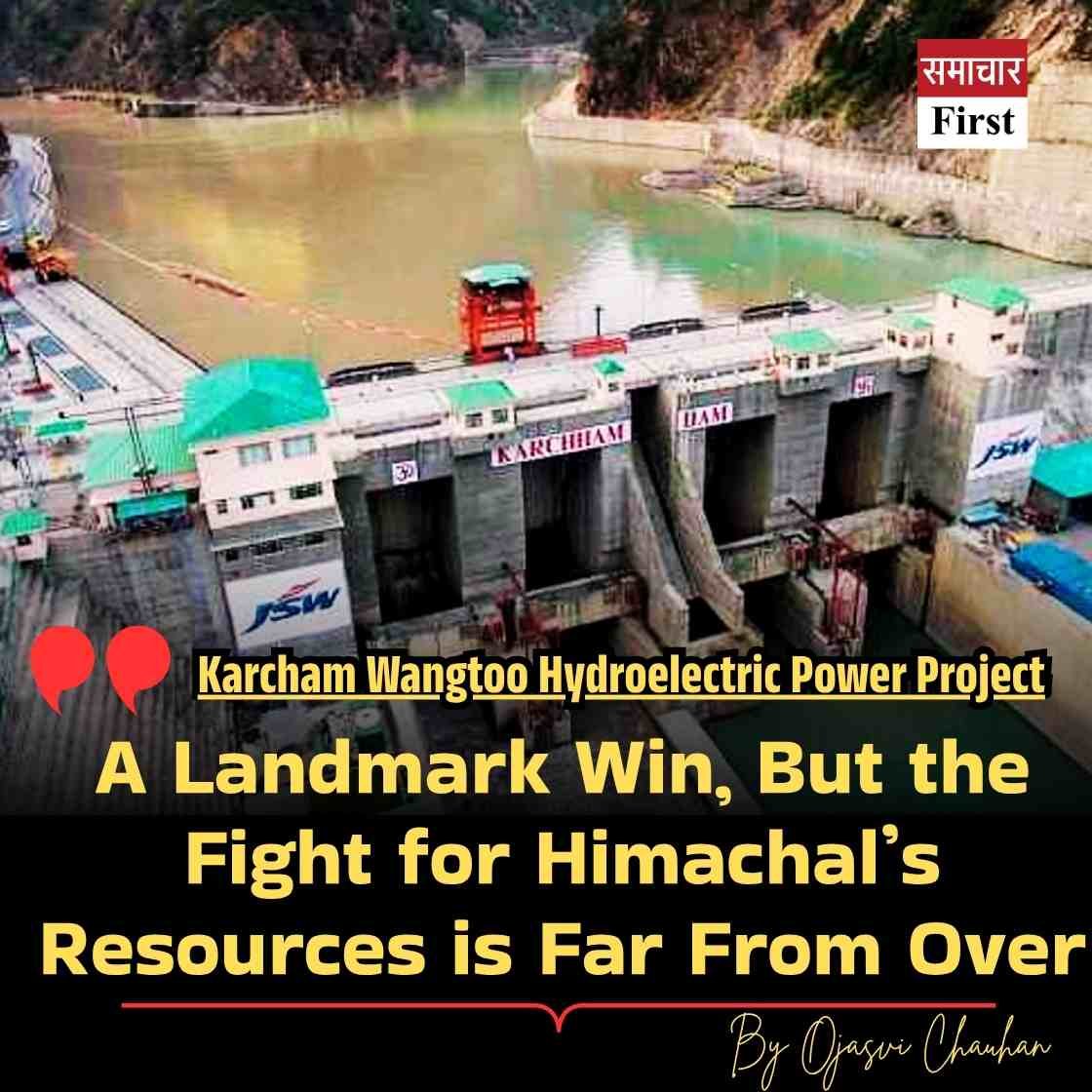
The Supreme Court’s verdict upholding Himachal Pradesh’s rightful claim to 18% free power from the 1,045 MW Karcham Wangtoo Hydroelectric Power Project marks not just a legal victory, but a larger assertion of the rights of hill states over their natural resources.
For years, Himachal Pradesh has watched private players extract hydropower from its rivers, often under agreements that were skewed in favour of the corporations. The 1999 agreement with the executing company of Karcham Wangtoo clearly laid out that while the royalty would be 12% for the first 12 years, it would increase to 18% thereafter. The company’s refusal to honour this commitment from September 2023 was not just a breach of contract—it was a challenge to the sovereignty of the state over its own resources.
The Himachal High Court’s earlier decision in favour of the company had sent a worrying message. It raised uncomfortable questions about whose interests were being safeguarded when state after state is already struggling to assert its rights in the face of growing centralisation and corporate pushback. That the Supreme Court has overturned that ruling is a timely reaffirmation of federal justice.
Chief Minister Sukhvinder Singh Sukhu deserves credit for not letting the matter die quietly in the files of bureaucracy. He chose the legal route and stayed the course—a rare thing in a political culture often marked by compromise and short-term calculations. The result? An annual additional income of ₹250 crore to the state exchequer from this single project. But this is not just about numbers. It is about precedent.
This victory will have far-reaching implications. If Himachal Pradesh can stand its ground and win, other hill and resource-rich states can too. It sends a clear message to all private and public power developers: agreements cannot be turned into suggestions once profits start rolling in. The days of extracting from the hills while giving its people crumbs in return must end.
But let us not romanticise this moment. It took a Supreme Court battle to get what was contractually ours. That fact alone should lead to introspection. Why were the terms not enforced earlier? Why was there no financial penalty or interest clause for default? How many other such projects are continuing under outdated agreements or being run on ambiguous terms?
This editorial is also a call to the state government: the fight does not end here. It must now proactively revisit all major hydroelectric agreements, enforce revised royalty structures, and ensure that the people of Himachal see the actual benefits—in infrastructure, in employment, in development. Not just figures on a balance sheet.
Himachal is not just a landscape to be photographed, it is a resource-rich state that deserves to be economically empowered and politically respected. The Supreme Court’s verdict has reminded us of our rights. It is now up to the government to ensure we don’t have to knock on the doors of courts again and again to claim what is already ours.